The Penny

Example is not the main thing in influencing others. It is the only thing.

[Saturday, October 24, 2009]

Listen Up

3 comments


The essentials: glasses, iPhone, CIs.

I said before that I have been impressed with the way Laynie has used her CIs all day everyday since getting them (February and August). It's especially impressive considering that she hasn't really benefitted from them since June.

In May, Laynie began having problems with her first CI, the one on the left side. She had pain during a mapping, and it caused problems after that with tingling, discomfort, and sometimes jabs of pain. Not really knowing what the problem was but assuming it was related to the amount of stimulation, her audiologist turned her down. When I say "stimulation" and "turned her down," I'm talking about electricity running through her cochlea, in close proximity to sensitive nerve endings. People are bound to run into problems with this sometimes.

The audiologist kept turning her down more and more, hoping that would solve the problem. It didn't. But things got quieter and quieter for Laynie. She was missing many speech and environmental sounds. She could no longer hear birds or bugs. She lost S, F, TH, and more. We stopped doing therapy in August, because it was just an exercise in frustration. And then, about two weeks ago, the tingling and discomfort stopped, pretty much overnight. A day or two after that, Laynie had a mapping session, her one-month mapping for her new CI. Her new CI was also quiet, because the audiologist wanted to keep them equal. It turned out that she had been hearing at about 60-65 dB. No wonder she was missing so many sounds!

At that mapping (about two weeks ago), she asked for more sound. She missed all the things she was able to hear a few months ago but had not heard all summer. She got her wish, with hearing levels at about 30 dB. But she feels like she started hearing even better a few days ago (funny that things will change a week or so after mapping). She still wants to hear MORE, especially on the right side. Her next mapping will be the first week in December.

See? Better.

Just for kicks, this is what fun, colored coils look like. I love that she chose blue for the left and red for the right. An audiologist's dream come true.

Now you see them...
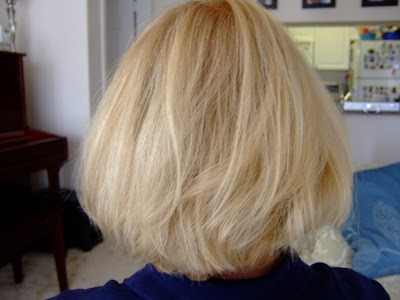
Now you don't!

She definitely is hearing better since this past mapping. I can use a normal voice and she turns to me. And she hates my cough again, ha. Yesterday, she was asking why I-695 is so much quieter than I-795. I had honestly never even noticed. As we drove to Target this morning, I realized that she is absolutely right. The only thing I could think of was that it might be because I-795 is made of concrete, while I-695 is paved with asphalt. Her speech is improving again, as well. She's using more final consonants, making nicer vowels, and her /s/ blends are sounding quite good. She told me to STop today, which was dah or dop preimplant. It's so nice to see her making progress and hearing new things again, after her four-month plateau. I guess it's time to get back on the horse with listening therapy.

Yesterday, I saw Laynie checking out the Phonak website, comparing the different FM transmitters. She liked the ZoomLink:


Of course, she wouldn't wear that, so I don't know why she cares about the transmitter. That's for the person speaking to her. She would use the little plug in MicroMLxS or MLxi or whatever. I've been thinking about FM systems since playing around with one with Laynie a few days ago. It seems like it would be perfect for her, because she doesn't need to hear a lot of people at home, just me. It would be nice to have one while out, so that she would be able to hear despite wind, crowds of people, noisy traffic, etc. The world is just full of challenging listening environments.

Too bad those things are so stinking expensive!

[Friday, October 23, 2009]

Please

0 comments


Parents, please sign with your deaf children.

Deaf children with strong signing skills have stronger English literacy skills (yes, compared with deaf children who speak).

Deaf children who sign have a more positive self-concept. That's psychobabble for feeling good about themselves.

Deaf children who sign are no worse at spoken language than their deaf peers who do not sign--in fact, they have better spoken language skills. FYI, language is where it's at in education. If children can't say their /r/ correctly, their education will probably not be affected. In my school district, we frequently do not pick up hearing children with /r/ problems, due to lack of educational impact. Language and the concepts learned through language will have a direct impact on every child's education. Why is it that parents are willing to buy the story that children can be bilingual in any combination of languages except ASL and English? Oh, right, because if they learn ASL, they won't be motivated to learn English. Foolishness. Engage your common sense and do not believe everything you hear just because a person with abbreviations following their name said it.

Deaf children who sign have better relationships with their parents and experience fewer communication breakdowns with their families.

Deaf children who sign can develop their brains from birth (or at least from identification of their deafness), instead of waiting until they are old enough to receive a cochlear implant. No, it will not make their brain develop in a way that will prevent them from learning spoken language. This is hogwash. This idea is propagated by those who stand to benefit monetarily from parents buying into it. There is zero research to back it. There is, however, research to back the idea that with the brain, if you don't use it, you lose it. A child deprived of language input (and don't tell me that hearing aids and lipreading provide adequate language input for an infant, because I will laugh in your face) will slowly lose their intellectual capacity. The brain is the most plastic and most rapidly developing during the first year of life. Unused neural connections are dying every day during the first year of life. The very year wasted waiting for a cochlear implant.

Deaf children who sign are able to acquire language in an age-appropriate manner. Deaf children do not have full access to spoken language, even with cochlear implants. That's why they need therapy to learn language, rather than acquiring language naturally. They do have full access to sign language.

Deaf children who sign are able to listen and understand spoken language using a cochlear implant or hearing aid.

Deaf children who sign are able to behave appropriately just as hearing children do. Just a quick story: a family I knew was told by a teacher of the deaf (who herself was deaf and raised orally) that they needed to stop signing with their four-year-old child, so that he would learn to hear and speak using his cochlear implant. The mother trusted this teacher and followed her advice. Within a few weeks, the child's behavior had seriously deteriorated, and his mother was at wits end with him. The oral program referred her to a behavior specialist. They worked on behavior modification. The situation dragged on for months as they visited with the behavior specialist often and even tried a pediatric psychiatrist. His mother finally followed her instincts and allowed him to communicate freely again. He was back to normal by the end of the week, and they were able to get rid of the rewards charts, tracking sheets, and time out chair.

Deaf children who sign are able to acquire age-appropriate social skills. Many professionals take it as a given that deaf children will need social skills training. It doesn't have to be that way.

Deaf children who sign are able to do everything hearing children can do. Think, learn, speak, listen, and achieve. Sign with your deaf children. They will thank you later.

I will step down from my soapbox now.

[Thursday, October 22, 2009]

Thoughts on FM Systems

0 comments

Many deaf students use FM systems, and many parents and professionals take it as a given that FM systems are always a good thing. I don't know. First, for the uninitiated, this is how it works:

A receiver like this one is plugged into the hearing aid or cochlear implant.

This is the transmitter. You wear it clipped to your belt or in a pouch worn with a sash, pageant-style. PE teachers often are not too into that look. Anyway, the microphone clips to the sash or to your shirt. The transmitter sends your voice directly to the implant (or hearing aid) via radio waves. You can set the receiver so that it only receives info from the FM transmitter (FM-only), which greatly reduces background noise and helps the child hear you better. You can also set the receiver so that it receives info half from the FM transmitter and half from the microphone on the implant (FM+mic), so that the child can hear others in the classroom, such as peers and paraeducators. The transmitters I use at work can work together, so that the child can hear two people teaching in the same room.

The benefits are obvious. Noise levels in classrooms can be excessive for hearing children, and it's even more difficult for deaf children to hear (that seems like an oxymoron anyway). Anything that helps the child hear better has to be good. But here are some potential pitfalls with FM systems:
- The whole "hearing two people teaching in the same room" thing is great... when they are both teaching the deaf child or children (by the way, I'm using deaf to mean deaf or hard of hearing here). If the class splits into groups and one teacher is with the deaf child and the other is with another group, the other teacher has to be conscious of her FM transmitter and switch it off. If you have more than one deaf child in the classroom and they are in different groups, the teachers would need to remember to change channels (each transmitter has several channels available) and resync. And if you have literacy or math centers with no adult facilitating, you would also want to turn off the FM. Teachers constantly have to be monitoring what the child might be hearing and whether the FM should be used during various times of the day. Keep in mind that teachers often have 15-25 children in a class, all of whom have needs.
- The child often needs to be on the FM-only setting to benefit from it, but that blocks out the other children's questions and comments. Teachers would need to repeat what the other children say.
- If the FM is not working properly or getting interference, the child might not tell you. My students certainly don't. They could be wasting instructional time.
- Teachers have to wear the device properly. This seems like a no brainer, but some people might put the sash/pouch on backwards, with the microphone on their back. Not kidding. Or wear it for an hour before realizing that it was never turned on. I'm not even talking about incompetent people (um, except maybe the microphone on the back), but people who are human and busy and overlook things.
- FM systems cannot help little kids during lunch, recess, and "centers" (free time)--the social times of the day. And trust me, the deaf child will not be able to hear during lunch or centers. Or indoor recess, which is often insanity. And even if an FM system could be used by many talkers at once and might be considered in a lunch or play situation, there's no way I would trust a 6-year-old with a $1000 device (yes, that is how much the transmitters cost). Especially not with food in the vicinity.

I do think that FM systems are good and often helpful, but they do not provide deaf children with the kind of access that many people think they do.

I had an opportunity to play around with an FM system with Laynie, which was fun. And informative. For example, she told me that when the microphone was in the middle of the chest (where people often wear it), she heard much less than when it was up near the collarbone. Laynie heard my voice quality, which was tending to go into fry, especially at the ends of my sentences. It was also scratchy, which I hope is just a regular sore throat and not from aspirating refluxate.. sigh. Anyway, that was interesting, because she could not hear that with her implants only.

When we did the Ling sounds, she said that /s/ was a little different, but "sh" was VERY different. The vowels and /m/ were the same.

Laynie thought that the sound through the FM was choppy, not smooth. As she used it more, she realized that she was hearing the stop-and-release-air sounds more (p, t, k, etc.). She also heard the high fricative sounds better (s, f, th). She especially noticed /s/. Probably because we say /s/ so often in English. ;) When I said "goals," while signing, she said, "You said goals, not goal!" This happened a few times with plural nouns. That was interesting and made me want to have an FM at home for her. I want her to have as perfect an auditory representation of English as possible.

Laynie said that having both implants on FM-only was much louder (better) than one on FM-only and the other on mic or FM+mic. FM-only on both implants was much louder than FM+mic on both implants, as well. When she was on FM-only and I put the transmitter several feet away and came up and spoke loudly near her implants, she could barely hear me.

We played Go Fish with animal cards, which we often do, and her pattern perception was better than normal. She was guessing words with the correct number of syllables and the correct kinds of sounds.

We read books and she did much worse with speech tracking than normal. She was hearing more syllables than she usually does, I think. It was messing her up.

FM systems are pretty cool technology. I wish they weren't so expensive, though. Receivers and transmitters are each around $1000, so a bilateral set-up with a single transmitter would run about $3000. Ouch. I do wish Laynie could afford it, though, because it would probably help her learn spoken English.

[Friday, October 16, 2009]

Question Friday Meme

1 comments

Strange question meme, I stole from jelly.


1. What is the color of your toothbrush? 
White and gray? Sonicare


2. Name one person who made you smile today. 
My sister, Katie, when she texted that she got a new job!


3. What were you doing at 8 am this morning? 
Taking a shower.


4. What were you doing 45 minutes ago? 
Playing a computer game.


5. What is your favorite candy bar?
Reese's Fastbreak


6. Have you ever been to a strip club? 
Nope!


7. What is the last thing you said aloud?
"I love you, bye" to Jennie on the phone.


8. What is your favorite ice cream? 
Mint chocolate chip


9. What was the last thing you had to drink? 
Water


10. Do you like your wallet?
I love my wallet. It has memories attached to it of shopping at Woodbury Common with 2-year-old Morgan, which we used to do often.


11. What was the last thing you ate? 
A Tums. My poor stomach has been struggling. Before that, some Oreos (yeah, maybe lay off the junk and my stomach will do better).


12. Have you bought any new clothing items this week? 
No


13. The last sporting event you watched? 
The Beijing Olympics?


14. What is your favorite flavor of popcorn? 
Not a big fan of popcorn, but I'd take butter and salt.


15. Who is the last person you sent a text message to?
My sister, Katie.


16. Ever go camping? 
Not very often.


17. Do you take vitamins daily?
Does Tums count? 


18. Do you go to church every Sunday?
Yes. Oh, except last Sunday, when I was in the ER.


19. Do you have a tan?
I think it's pretty much faded.


20. Do you prefer Chinese food over pizza? 
Both are good, but I'd have to go with pizza.


21. Do you drink your soda with a straw? 
Uh... well, I rarely drink soda. I guess if it's fountain soda, I would. But I wouldn't use a straw to drink soda from a can or cup. Doesn't that seem a little pretentious?


22. What did your last text message say?
"Yeah, about." (she asked if taxes would subtract $8K from $29K earnings)


23. What are you doing tomorrow? 
Getting up early to help Laynie study for her comprehensive exam. Scary! Probably celebrating her exam survival later. I wanted to celebrate Katie's new job, but she has to work a double (loser).


24. Favorite color? 
Blue


25. Look to your left; what do see? 
My iPhone.


26. What color is your watch? 
Silver. (White gold?) Black face. No numbers.


27. What do you think of when you hear “Australia”? 
Aborigines


28. Would you strip for money? 
No.


29. Do you go in a fast food place or just hit the drive thru? 
Well, I only go to fast food places when I'm desperate and in a hurry, so probably drive thru.


30. What is your favorite number? 
7. Duh, it's the best number.


31. Who’s the last person you talked to on the phone? 
Jennifer Suzanne Busselberg McQuade


32. Any plans today? 
Helping Laynie study for comps. Maybe making cookies later. 


33. In how many states have you lived?
Only 7.


34. Biggest annoyance right now? 
A nasty parent of one of my students.


35. Last song listened to? 
Brandi Carlile: Pride and Joy. Ah, Brandi.


36. Can you say the alphabet backwards? 
Yes. I can even do the Greek alphabet backwards, which I learned in my high school Latin class. The teacher wanted us to be ready to pledge sororities. See, high school is valuable.


37. Do you have a maid service clean your house? 
I wish!


38. Favorite pair of shoes you wear all the time? 
Danskos


39. Are you jealous of anyone?
No


40. Is anyone jealous of you? 
Hm. People have expressed jealousy of my brain, because it's easy for me to learn things. And my research paper-writing skills.


41. Do you love anyone? 
Yes, of course.


42. Do any of your friends have children?
Yes.


43. What do you usually do during the day?
Depends on the day. Mondays, Tuesdays, Fridays: drive all over Columbia and Ellicott City to service preschoolers in private preschools and daycares. Wednesdays & Thursdays: work with deaf kindergarteners and hearing little guys with unintelligible speech. One thing I usually do often during the day is check my email. I'm addicted to my iPhone. 


44. Do you hate anyone that you know right now? 
No, but I am very, very frustrated with a nasty, unreasonable person.


45. Do you use the word hello daily? 
I would be more likely to say hi. Or hi-how-are-ya?


46. What color is your car? 
OK, Toyota calls it Champagne Gold, but it's Silver.


47. What size wedding ring do you wear?
I don't have a wedding ring, and I don't wear rings. I think my wedding ring finger is a 7 or 8. I have pretty chubby fingers.


48. Are you thinking about someone right now? 
No, I was just thinking about my ring finger...


49. Have you ever been to Six Flags? 
Yes, the one in NJ and I think in MD. But I hate Six Flags, because I don't ride roller coasters. It's totally boring for me. Give me a water park!


50. How did you get your worst scar? 
My worst scars are my emotional ones, but let's not go there.
I don't have any major scars, but I have two small ones under my chin. One is from when I was two years old, walking down the (wood floored) hall wrapped in a towel, and I slipped. My poor little arms couldn't break my fall, because I was all wrapped up! The other is from when I was three years old, and I fell off a bike I was playing on at a store. My chin hit the spiky metal pedal.

[Sunday, October 11, 2009]

Do I Have a Tale for You...

1 comments


I had the privilege of spending the night in the ER at Johns Hopkins. What an experience!

During my four hours in the waiting room (while in excruciating pain, mind you) and my eight hours in and out of Bed 28, I saw and heard some exceptional things. Actually, I think they are not exceptional but typical, which is sad. Let me present you with a series of vignettes.

A woman starts an argument with another woman in the waiting area. They move to the lobby, where things become physical. Right in front of the main security guard's desk.

A man in a wheelchair (NOT unusual--probably a quarter of the people waiting went out and got wheelchairs for themselves) "gets loud" with a woman in the waiting area. A female security guard tells him to cut it out, and he blames the woman for making him yell at her. The security guard tells him, "You a grown up man and you sayin' she made you? Can't nobody make you. You a grown up man." A valid point, to which said man replies, "Now you mad at me? I didn't do nothing, you tell her she gotta quit makin' me mad." The guard assures him that she is not mad at him. Wheeling him out, she continues, "I just disappointed that you say somebody made you, when you a grown up man and you supposed to know how to behave. Now, you know you can't stay here when you loud."

Sylvia Squires wanders through the waiting area aimlessly. She sits in various chairs, finally parking it at one of the registration windows, wanting to have a chat. The woman at that window seems to know her, and she ignores her. After a moment, the woman leaves Sylvia alone. Sylvia (I know her name because she said it so often) initiates a conversation with herself. Although I was actively trying to ignore her, I could not help but hear some of what she said, because she was three feet away from me. Sylvia is 51 years old, with two grown daughters. Their fathers were not Mexican. Her current boyfriend, however, is. He is a mean drunk who cannot hold his liquor, and he smacks her around all the time. He tried to throw her through a window. Sylvia, on the other hand, can drink all day and all night, without any deleterious effects. She hates Mexicans, because they have too many kids, like leeches. Sylvia is a sociable person, loudly inviting everyone in the waiting area to go out for drinks rather than wait any longer. As the night wears on, Sylvia becomes increasingly belligerent. Each time a nurse calls a patient's name, she yells, "Squires?? Do you have Squires?" They firmly tell her no, and she lets them know that they are smart mouths, and that she has been here since 6:00/4:00/5:30 (fill in a random time). Sylvia runs into an acquaintance, who is at the security desk, complaining that she has waited too long and would like her IV out. After 15 minutes, a nurse is available to do this for her. The friend looks back into the waiting area and notices Sylvia slumped over in a chair; she calls out, "Sylvia, are you OK?" No answer. Sylvia has fallen asleep. When I leave the hospital, eight hours later, Sylvia has not moved.

A young couple comes in, the girl obviously having abdominal pain and feeling poorly. She sits next to me and leans against her boyfriend, who stands in front of her, murmuring in Korean and stroking her head.

A man does laps in the waiting area in his wheelchair. He bumps into things and blocks people's path. 

A man comes out of triage reeking of urine. His dirty clothing and unkempt appearance bespeak a life different than mine. He encounters a "brother" in the waiting area, who is similarly attired and sports a black eye. Pee Man stands near the security desk, chatting with his brother, while the security people gag. The same female security guard who escorted loud man out of the building takes it upon herself to grab a can of air freshener and spray it directly at Pee Man's back for at least 10 seconds. This does not even touch the funk in the air, and it does not phase Pee Man. She goes through a set of double doors; five minutes later, she emerges with a set of scrubs and a plastic bag. She informs Pee Man that she cannot handle his stink, that he must change. He is understandably worried that someone might steal his blue jeans, and she reassures him, instructing him to carry them in the plastic bag. Pee Man reluctantly enters the men's bathroom and reappears in bulky scrubs, without the plastic bag. He leaves shortly, but for the next several hours, every person who walks through the ER waiting area (the elevators to the peds ER are at the back of the adult ER waiting area, so parents dragged children through the room from time to time) comments on the smell. An hour later, a triage orderly travels throughout the room, spritzing liberally with a fruity spray, smiling like Miss America. Her journey was more welcome than any beauty queen's.

In a monitored bed in the ER, a diabetic woman is there because she stopped taking all of her meds. Although she doesn't have any family and really doesn't care, she accepts the central line that must be placed in her neck. She asks for food and is told that she can eat a bunch of bananas, or she can have orange juice. She weakly accepts the juice.

Later, in that same bed, a man with a thick Baltimore accent has difficulty answering questions from the nurse and doctor. He provides tangential information with each answer, but I will spare you that. Has anyone ever discussed diabetes with you? No. So, when you were in the hospital a month ago, did they tell you that your blood sugar was high? Um, yeah, they gave me a shot for it. Oh, they did. And did they give you medicine to take home? No. Did you follow up with your primary care doctor? No. They didn't tell you to follow up with your primary care doctor? Well, I've been taking the medicine my doctor gave me. Medicine for what? Diabetes. Which doctor gave it to you? My regular doctor. So your regular doctor is treating you for diabetes? Well, yeah. Did you take your medicine today? Of course. Later: Does this hurt? Yes. Where does it hurt? On my leg. Where on your leg: the front or the back? What? Where exactly does it hurt? Where does what hurt? Your leg. When I push here, does it hurt on the front or the back? The back? OK, this is the front, and this is the back. Does it hurt on the front or the back? Oh, the front.

A woman lies snoring in a monitored bed in the ER. She was brought in because she was searching a manhole for a cat. There was no cat.

[Saturday, October 10, 2009]

I Heart Brandi Carlile

1 comments

Brandi rocks. Laynie took this cool picture.

Katie and I are waiting for the show to begin.

Laynie and Katie are waiting for the show to begin.

Katie (my sister), Laynie (my friend), and I went to Brandi Carlile's show at the Ram's Head in Baltimore Thursday night. It was awesome!! Laynie blogged about it here, but I will give you my version.

First off, Ram's Head Tavern and Ram's Head Live are so different. In March, we saw Brandi at Ram's Head Tavern in Annapolis, which is a sit-down place, like a large jazz club. Tables, servers, etc. It was fun, and the music was great, but it was rather sedate compared with Ram's Head Live. Ram's Head Live is basically just an open, three-floored room, bare bones. There's a bar and a large open area in front of the stage. On the second and third floors, there are catwalks where people stand at the railing to watch the show. It had a completely different vibe: fresh, energetic, now.

We staked out a spot about 10 feet from the stage, right in the middle. That was because we got there about 45 minutes early. :D Amy Ray from the Indigo Girls opened for Brandi (funny that Brandi opened for the Indigo Girls a few years back). Laynie hated Amy Ray, and Katie and I assured her that it wasn't just because Laynie is deaf. I think Amy's music is pretty boring, and the audio mix was horrible. The electric guitars and drums drowned out her voice. I understood maybe three words that she said. Nothing about her music was distinctive. Brandi came out and sang a couple of songs with her, and I couldn't hear her voice very well either. But it was what Amy was looking for, because she brought her own sound guy, whom she thanked from the stage. Oh, and Amy's show was so LOUD that I had a temporary threshold shift. Good thing there was about an hour-long break between Amy's and Brandi's shows, because my ears were able to recover somewhat. At least it didn't affect our communication, because we were using ASL anyway. The one thing we like about Amy was her drummer, who seemed to be on happy pills. Reeeeeeally happy pills.

On to the good stuff--Brandi! A letter to Brandi Carlile:

*****

Dear Brandi,

Your live shows are awesome, especially the one in Baltimore on October 8, 2009. You sounded amazing, your sound was perfectly mixed, and the light show added so much to your songs. Thanks for playing "I Will," which is quickly becoming one of my favorites from the new album. "Dying Day" unplugged was awesome! People actually shushed each other as the song started, desperate to hear you.


"That Year" was touching. I think my sister might have teared up a little.


I have loved the song "Before It Breaks" for several months now (I know the album just came out on Tuesday, but I've sort of been YouTube stalking you), so I was happy to hear you play it. And Laynie, my videographer, recorded it with her little camera. Unfortunately, the audio crapped out with every drumbeat. Still fun to have.


It was fun to do "Turpentine," and wasn't the audience in Baltimore much better at it than those old fogies in Annapolis? Yeah, we sounded great. No video of that, but you've done it before, and here's someone else's video.


The Swiss rock, huh? Hey, so did Baltimore. Anyway, it was a great show. Can you come back to Baltimore next week. Thanks!

Love, Annie
p.s. I noticed you staring at us when you first came onstage to play with Amy Ray. We were chatting in ASL, not paying attention to Amy. You must have wondered why deaf people would go to a concert. Well, Katie and I can hear. Actually, so can Laynie.

*****

We had such a great time. I was pleasantly surprised that Laynie LOVED IT, given that she hated the Brandi concert in March and was totally bored. At this week's show, she kept turning around with sparkly eyes, making comments, and asking questions. More experience listening? Being bilateral? The addition of drums (Alli rocked!)? The electric guitars? Last time was pretty must acoustic. I don't know, but I'm glad she enjoyed it. We all had a great time.

[Monday, October 5, 2009]

Literacy Research in Deaf Education

0 comments

Summary and thoughts:

Luckner, J., Sebald, A., Cooney, J., Young, J., & Muir, S. (2005/2006). An examination of the evidence-based literacy research in deaf education. American Annals of the Deaf, 150, 443-456.

"People who struggle to read and write are much more likely than literate people to drop out of school, go to prison, or struggle to find and keep meaningful, satisfying work." Yikes!

This article was a meta-analysis of the research over the past 25 years or so that studied deaf literacy learning.

There are some deaf and hard of hearing students who read at grade level. Some become successful writers. But most have a hard time learning literacy. Here are some problems that people often say are the reasons deaf students struggle with literacy:

1. Less access to the phonological code. This relates to the Goldin-Meadow and Mayberry (2001) article. ASL has its own vocabulary, which does not relate to English phonology. Auditory/oral deaf children do not hear well enough to access English phonology.

2. Limited language fluency. Many deaf children are not fluent in a spoken or signed language when they begin school. Reading and writing depend on a language foundation (spoken or signed). Many deaf children have to learn to read and write while learning their first language at the same time.

3. Not enough literacy experiences in early childhood. Deaf children do not have books read to them as often as hearing children. Parents do not feel comfortable signing, have a limited sign vocabulary, or have trouble finding a way to position the child and the book and still make eye contact.

4. Delayed vocabulary acquisition. Vocabulary is a major key to reading comprehension.

5. Problems with lower-level skills. Many deaf students struggle with word recognition, syntax, and vocabulary comprehension. Because of this, they do not develop the independent reading strategies that they need, such as self-questions, activating prior knowledge, etc. They need to a foundation of lower-level skills before they can learn higher-level literacy skills.

So what can we do?

1. Explicit vocabulary instruction and practice with short passages. Tell them the definition of a word, show them a sentence using the word, and use computer programs to practice the vocabulary words.

2. High-interest literature. This study used "adapted classics," meaning classic books like Treasure Island that have been changed in grammar and vocabulary to fit different (lower) reading levels.

3. Instruction in ASL grammar and how to translate ASL into written English. Exactly what it looks like. Teach ASL grammar just as hearing students learn English grammar. Practice translating ASL into written English.

4. Teacher discussion of stories. The teacher discusses the story and teaches students to summarize, question, clarify, and predict.

5. Instruction in reading comprehension strategies. For example, teach story grammar (characters, plot, etc.) and locating details in the text.

6. Interaction. Communicate and play games using English. Real interactions are better than analyzing grammar. You can use email, chat rooms, and the internet.

7. Reading to young students. Evening group storybook reading had a positive effect on independent reading and interest in books.

8. Use of captions. Watching videos with captioning improved comprehension of visual information.

9. Intensified instruction. The teachers were given plenty of materials and space to teach just a few students each.

10. Use of word processing. Let students use Word (or another program) so that they can use spell checker.

12. Use of simple stories and word recognition practice with young readers. Exactly what is says.

13. Use of the general education curriculum. Teach them what the hearing children are learning.

14. Direct teaching of sight words and teaching of morphological rules. Again, this is exactly what it says. And morphological basically means word endings, like going, takes, walked.

Now go get them!